指導者 · Shidōsha

The Teacher

The work of a teacher is not to become the center of the practice, but to faithfully receive, embody, and pass it forward. The following introduction offers some background on the teacher of the Usui Reiki International Gakkai and the path that led to the founding of this organization.

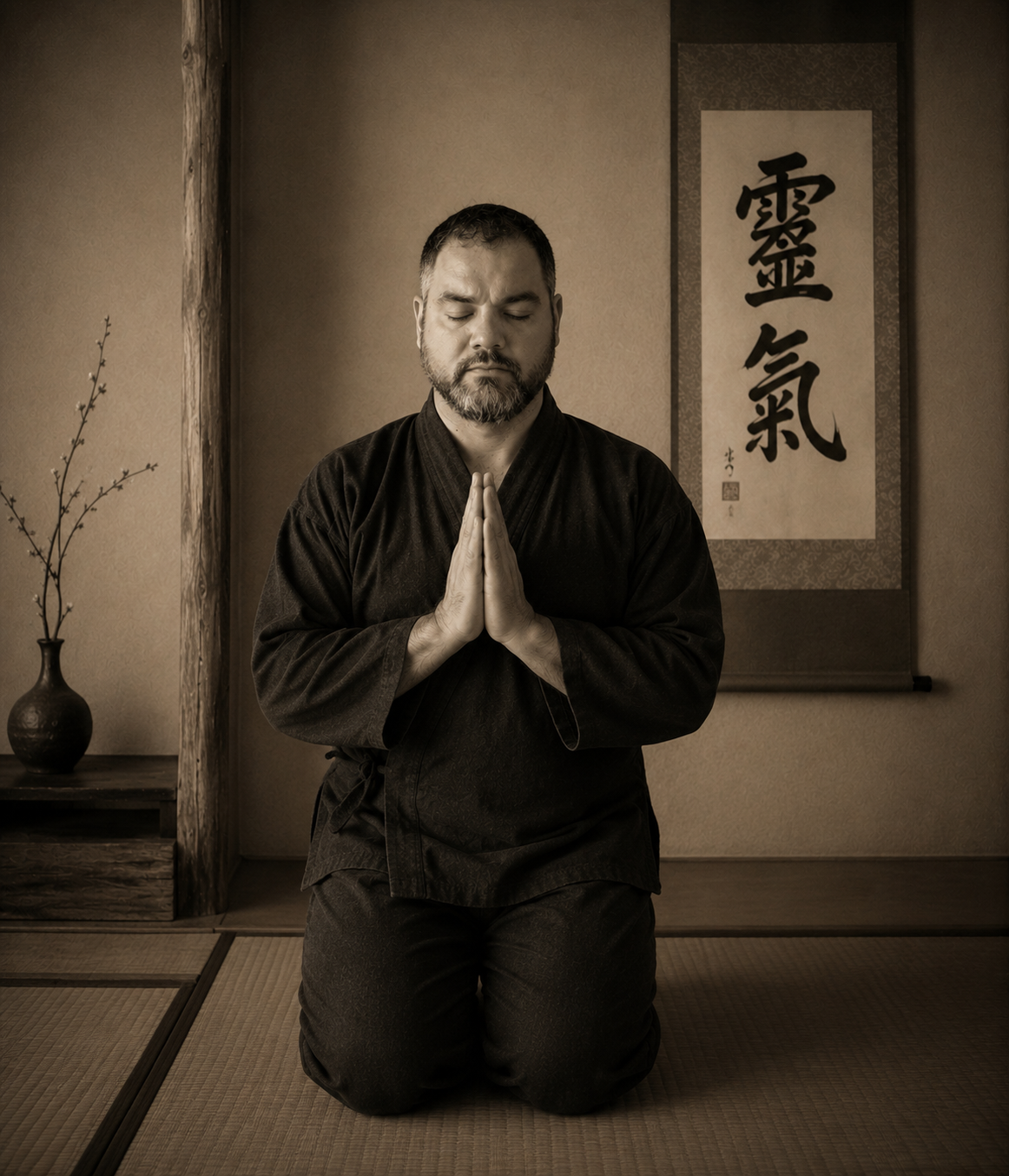
Portrait of Timothy Seaton, founder and teacher of the Usui Reiki International Gakkai.

Timothy Seaton, founder and teacher of the Usui Reiki International Gakkai. Daily practice begins with stillness, humility, and the sincere cultivation of one's own life before guiding others.

A Path of Study

My study of Reiki began many years ago, shaped by a long-standing interest in Japanese spiritual practice and disciplined self-cultivation. I first trained in Reiki under Mary Ann McFadyen, whose lineage followed Chujiro Hayashi and Hawayo Takata.

That early training opened a door, but it was only the beginning. I continued to study traditional Japanese Usui Reiki Ryōhō, seeking to understand the practice in the form and context from which it emerged.

My current teaching lineage flows through Hiroshi Doi and Frans Stiene, both of whom have devoted decades to the research and transmission of traditional Japanese Reiki.

I do not claim mastery. The longer I study, the more I see that this work is a matter of lifelong cultivation.


Zen Practice

I am a practitioner of Sōtō Zen Buddhism. This personal practice has deepened my appreciation for silence, attention, humility, and daily cultivation.

The Usui Reiki International Gakkai is not a Buddhist organization. Participation does not require adherence to Buddhism or any religion, and students of all backgrounds are welcome. My Zen practice is simply part of the context from which I approach teaching.


Why the Gakkai Was Founded

The Usui Reiki International Gakkai was established to preserve traditional Japanese approaches to Usui Reiki Ryōhō, to restore careful teacher–student transmission, and to encourage sincere daily practice.

We sought to create a setting in which learning unfolds over time, supported by a long-term community of practice rather than by rapid certification. Our focus is on the quality of understanding and the steadiness of practice.

We describe what we value plainly, without criticizing the many other ways Reiki is taught today.


Teaching Philosophy

My approach to teaching is built on careful observation, patience, and humility. I believe that direct experience matters more than theory, and that the quality of a student's practice matters more than the speed at which they move through a course.

I see teaching as an extension of practice — not a performance, not a position, and not an end in itself. The tradition is greater than any individual, and the teacher's role is to keep it intact and pass it forward with care.


Continuing Study

Like every sincere practitioner, I remain a student. Teaching is one expression of practice, but not its completion. The traditions entrusted to us deserve careful stewardship, continued study, and the humility to keep learning throughout one's life.


Invitation

If the approach described throughout this website resonates with you, I welcome your inquiry. Our first conversation is an opportunity to ask questions, become acquainted, and determine together whether the path offered by the Gakkai is the right one for you.